By Mladen Terzic
Shopify UI/UX & Design
2nd Jul 2026
6 min read
Is Shopify Safe? What Buyers and Store Owners Should Know
Shopify is a powerhouse in the ecommerce world, but does platform security guarantee a trustworthy shopping experience? This comprehensive guide breaks down everything buyers and store owners need to know about Shopify safety, avoiding common scams, and building a storefront that genuinely earns customer trust.
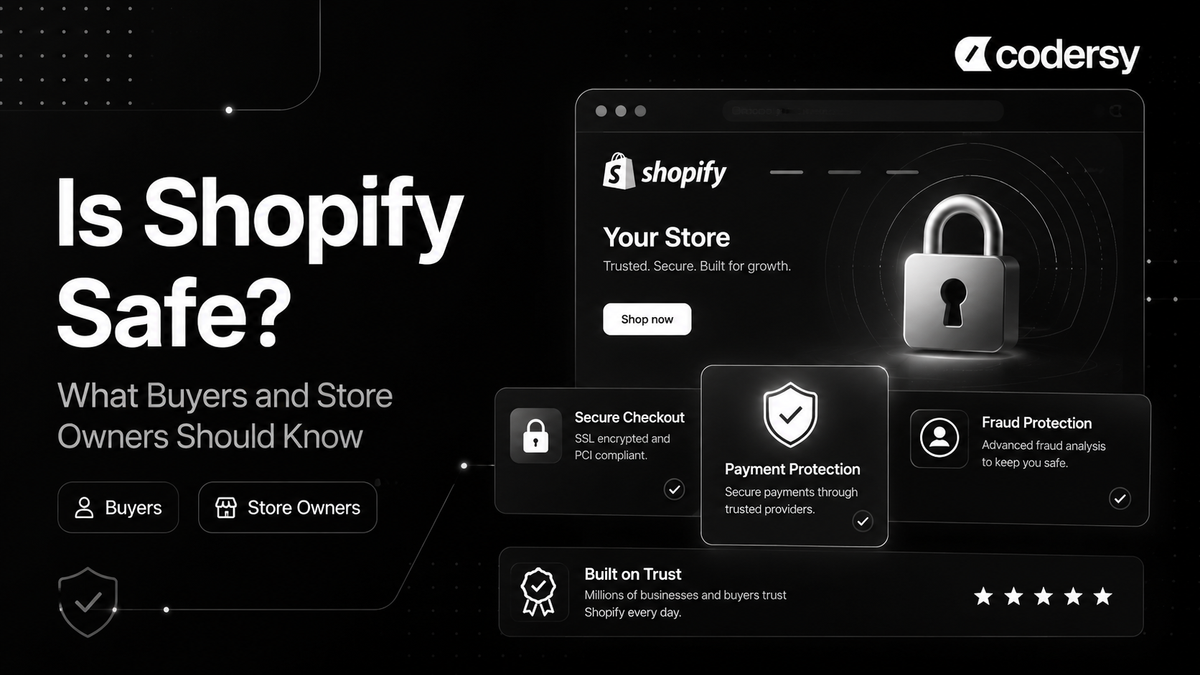

Shopify is a legitimate ecommerce platform, but that does not automatically mean every individual Shopify store is trustworthy.
That is the most important distinction.
Shopify provides the platform, checkout infrastructure, security features, and tools that businesses use to create online stores. But each Shopify store is operated by a separate business. That means the safety of a purchase also depends on the store owner, product quality, shipping process, return policy, customer support, and how clearly the store presents itself.
For buyers, the question is not only “is Shopify safe?” It is also: is this specific Shopify store trustworthy?
For store owners, the question is slightly different: does Shopify provide a secure foundation, and what do I need to do to make my store feel safe for customers?
This guide explains both sides: how Shopify works as a legitimate ecommerce platform, what buyers should check before ordering, how Shopify scams can happen, and what store owners can do to build a safer and more trustworthy store.
Is Shopify a Legit Website or Platform?
Shopify is a legitimate ecommerce platform used by businesses to build and manage online stores.
Shopify describes itself as a commerce platform that helps businesses sell online, in person, and across different channels.
But Shopify is not one single online store.
This is where many buyers get confused. When you buy from a Shopify store, you are usually buying from an independent business that uses Shopify as its ecommerce platform. Shopify provides the technology behind the store, but the individual merchant is responsible for the products, shipping, customer service, policies, and day-to-day business operations.
So if you are asking “is Shopify a legit website?”, the answer is yes when we are talking about Shopify as a company and platform.
But if you are asking whether a specific store built on Shopify is legitimate, you need to review that store separately.
A real Shopify store should still have basic trust signals, such as clear contact information, product details, shipping information, refund policies, secure checkout, and a brand presence that does not feel rushed or suspicious.
Is It Safe to Buy From a Shopify Store?
Buying from a Shopify store can be safe, but the trust level depends on the individual store.
A Shopify store is not automatically trustworthy just because it runs on Shopify. In the same way, a website is not automatically reliable just because it uses a well-known hosting provider or ecommerce system.
For buyers, the safest approach is to check the store before placing an order.
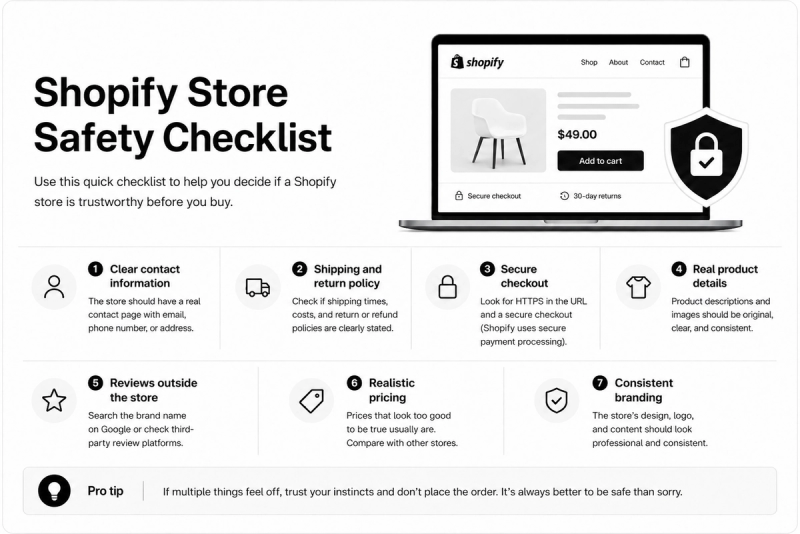
Look for signs such as:
- clear contact information,
- realistic product photos and descriptions,
- visible shipping and return policies,
- secure checkout,
- normal payment options,
- real customer reviews outside the store if available,
- a domain and brand name that look consistent,
- and pricing that does not look too good to be true.
The Federal Trade Commission recommends checking sellers and products before buying online and keeping records of purchases such as receipts and emails, based on the FTC’s online shopping guidance.
This does not mean buyers should distrust every unfamiliar Shopify store. Many legitimate small businesses, growing brands, and established retailers use Shopify.
It means buyers should separate the platform from the store. Shopify can provide the ecommerce infrastructure, but the store owner still needs to earn customer trust.
Shopify Scams: What Buyers Should Watch For
Shopify is a legitimate platform, but scam stores can exist on almost any ecommerce platform.
That is why buyers should not judge a store only by the platform it uses. A Shopify store can be completely legitimate, but a suspicious store can also use Shopify to look more professional than it really is.
Common warning signs include:
- prices that look unrealistically low,
- no clear contact information,
- no real shipping or return policy,
- copied product photos,
- generic product descriptions,
- a brand name that does not match the domain,
- no reviews outside the website,
- aggressive countdown timers or pressure tactics,
- poor grammar or inconsistent page design,
- and a checkout experience that feels unusual or unclear.
This does not mean every new or small Shopify store is a scam.
Many real businesses start small and may not have thousands of reviews yet. But if several warning signs appear together, buyers should slow down before placing an order.
A good way to avoid Shopify scams is to check the store like you would check any unfamiliar online shop. Look for real business information, clear policies, realistic pricing, and a payment experience that feels secure and standard.
The FTC recommends being cautious with online sellers, checking the seller and product before buying, and keeping records such as receipts and order confirmations, based on the FTC’s online shopping guidance.
For store owners, this is also important.
Even if your store is legitimate, missing trust signals can make buyers hesitate. A store with no contact page, unclear policies, weak product descriptions, or messy design can accidentally look less trustworthy than it really is.
How to Check If a Shopify Store Is Safe
Before buying from a Shopify store you do not know, check a few simple things.
Start with the basics. A trustworthy store should usually make it easy to understand who is selling the product, how shipping works, what happens if you need a return, and how you can contact support.
A practical safety check can include:
- reviewing the contact page,
- checking the shipping policy,
- checking the return and refund policy,
- searching the brand name outside the store,
- looking for real customer reviews,
- checking whether product photos look original,
- comparing prices with similar stores,
- reviewing the domain name,
- and making sure the checkout page looks secure.
You should also be careful with stores that rely only on urgency.
Limited-time offers, countdown timers, and discounts can be normal in ecommerce, but they should not replace basic trust signals. If a store pushes you to buy quickly while hiding contact details, policies, or product information, that is a reason to be cautious.
Payment method also matters.
Using a payment method with buyer protection can give you more options if something goes wrong. It is also smart to keep your order confirmation, receipt, tracking email, and any communication with the store.
For buyers, the safest mindset is simple: Shopify can be a legitimate platform, but each individual store still needs to prove that it is trustworthy.
For store owners, the lesson is the same from the other side. If you want customers to feel safe, trust needs to be easy to verify. Clear policies, professional product pages, consistent branding, visible contact information, and a clean checkout experience can all help reduce doubt before purchase.
What Makes Shopify Safe for Store Owners?
For store owners, Shopify can provide a strong security foundation for running an ecommerce business.
Shopify states that it is certified Level 1 PCI DSS compliant, and that this compliance extends by default to all stores powered by Shopify, based on Shopify’s PCI compliance page.
This matters because online stores handle sensitive payment activity. A secure ecommerce setup needs to protect payment data, checkout activity, customer accounts, admin access, and store operations.
Shopify also has a dedicated security page covering areas such as PCI compliance, privacy, secure development, and platform security, according to Shopify’s security page.
For many store owners, this is one of the reasons Shopify can be practical. The platform handles a large part of the technical security foundation that would otherwise require more manual infrastructure work.
But store security is not only about the platform.
A safer Shopify store also depends on how the owner manages access, apps, permissions, payment settings, policies, and customer-facing trust signals.
For example, Shopify recommends activating two-step authentication to reduce the likelihood that someone who has acquired your password can cause damage.
So for store owners, Shopify can offer a secure base, but the store still needs to be managed carefully.
What Shopify Security Does Not Automatically Cover
Shopify can provide the platform and security infrastructure, but it does not automatically make every store trustworthy, well-managed, or safe from operational mistakes.
This is where store owners need to understand the difference between platform security and store trust.
Shopify security does not automatically guarantee that:
- the store has clear contact information,
- the refund policy is easy to understand,
- products are described accurately,
- shipping expectations are realistic,
- every installed app is necessary or well configured,
- staff permissions are managed carefully,
- customer support is reliable,
- or the storefront looks professional enough to build buyer confidence.
For buyers, this means a Shopify checkout alone does not prove that every store is trustworthy.
For store owners, it means security and trust need to be built into the full customer experience, not only the payment system.
A store can run on a legitimate platform and still lose trust if it has missing policies, weak product pages, confusing checkout information, poor mobile experience, unclear branding, or too many suspicious-looking urgency tactics.
The same applies inside the admin. Weak passwords, unused staff accounts, unnecessary app permissions, and poor access control can create risk even when the platform itself has strong security standards.
That is why a safe Shopify store is not only about using Shopify. It is also about using Shopify properly.
How Store Owners Can Build a Safer Shopify Store
For store owners, safety is not only about the platform. It is also about how the store is built, managed, and presented to customers.
A safer Shopify store usually starts with basic operational discipline:
- use strong passwords,
- enable two-step authentication,
- limit staff permissions,
- remove unused staff accounts,
- review app permissions before installing apps,
- keep only apps that are actually needed,
- use clear shipping and return policies,
- make contact information easy to find,
- and monitor suspicious orders or chargeback patterns.
Shopify also provides fraud analysis tools that can help merchants review orders before fulfillment, based on Shopify’s fraud analysis documentation.
Apps also deserve careful review. Before installing an app, store owners should understand what the app changes, which permissions it requests, and whether it touches customer data, orders, theme code, checkout-related functionality, or tracking.
For a deeper look at app requirements, the Shopify App Store guidelines key requirements article can help explain what Shopify expects from apps listed in its ecosystem.
This does not mean fraud or security issues can be removed completely. It means store owners should use the tools available, limit unnecessary access, and build internal habits that reduce risk.
The customer-facing side matters too.
A store can have a secure checkout and still make buyers uncomfortable if the design looks unfinished, product pages are thin, policies are missing, or the brand gives no clear way to contact support.
If security, checkout clarity, policy pages, app setup, and storefront structure are part of a larger launch or redesign, Shopify store build can help create a cleaner and more reliable customer experience from the start.
For buyers, trust comes from what they can see before ordering.
For store owners, that means security and trust should be part of the full storefront experience, not only the checkout.
Final Thoughts
So, is Shopify safe?
Shopify is a legitimate ecommerce platform with serious security infrastructure, but that does not automatically make every individual Shopify store trustworthy.
For buyers, the safest approach is to check the store before ordering. Look at contact details, policies, product information, reviews, pricing, payment methods, and whether the store feels transparent.
For store owners, Shopify can provide a strong technical foundation, but trust still depends on how the store is built and managed. Secure checkout, clear policies, careful app usage, proper staff access, strong account security, and professional storefront structure all matter.
The key point is simple: Shopify can be a safe platform, but safety and trust also depend on the individual store.