Mladen is a wizard! He has helped elevate my Shopify site to the next level with his coding experience and expertise. Things I thought could never be done due to the limitations with my store's theme, he made happen. His communication and response rate is fantastic, he is super skilled, and speaks in layman's terms so anyone can understand what he means. I only wish I knew about him years ago when I started my Shopify store! He's helped take my site to the next level and I couldn't be happier. I look forward to working with him for years to come. 10000% would recommend!
← IndustriesFashion
Shopify Development for Fashion Brands
A Shopify Plus Partner for fashion. We have shipped image-heavy, conversion-tuned stores for Barbosa, Ruve, Woolona, Collegiate Knitwear and Editiony — and we know the difference between a beautiful Shopify theme and one that converts.
From €3,000
What fashion brands actually need from Shopify
Fashion is not a generic e-commerce category. Image performance, drop mechanics, sizing, multi-region pricing and editorial templates all shape the build from day one — and they all break the moment a non-fashion-experienced agency ships them.
Image-heavy stores that load fast
Fashion stores live or die by photography. We ship Shopify themes with AVIF/WebP variants, responsive sizes, smart preloading and LCP under 2.5s — even on a 4G connection on the way to the train.
Drops, launches and timed releases
Whether you launch capsules monthly or twice a year, we build the queue, scheduled-publish, password-gated launch and inventory-locking flows that fashion drops actually need.
Multi-currency for global fashion
Fashion is the most global category in commerce. Shopify Markets configured properly, GBP/EUR/USD parallel pricing, hreflang on /uk/, /eu/ and /us/ paths, and tax-included pricing per region.
Fashion brands we have worked with
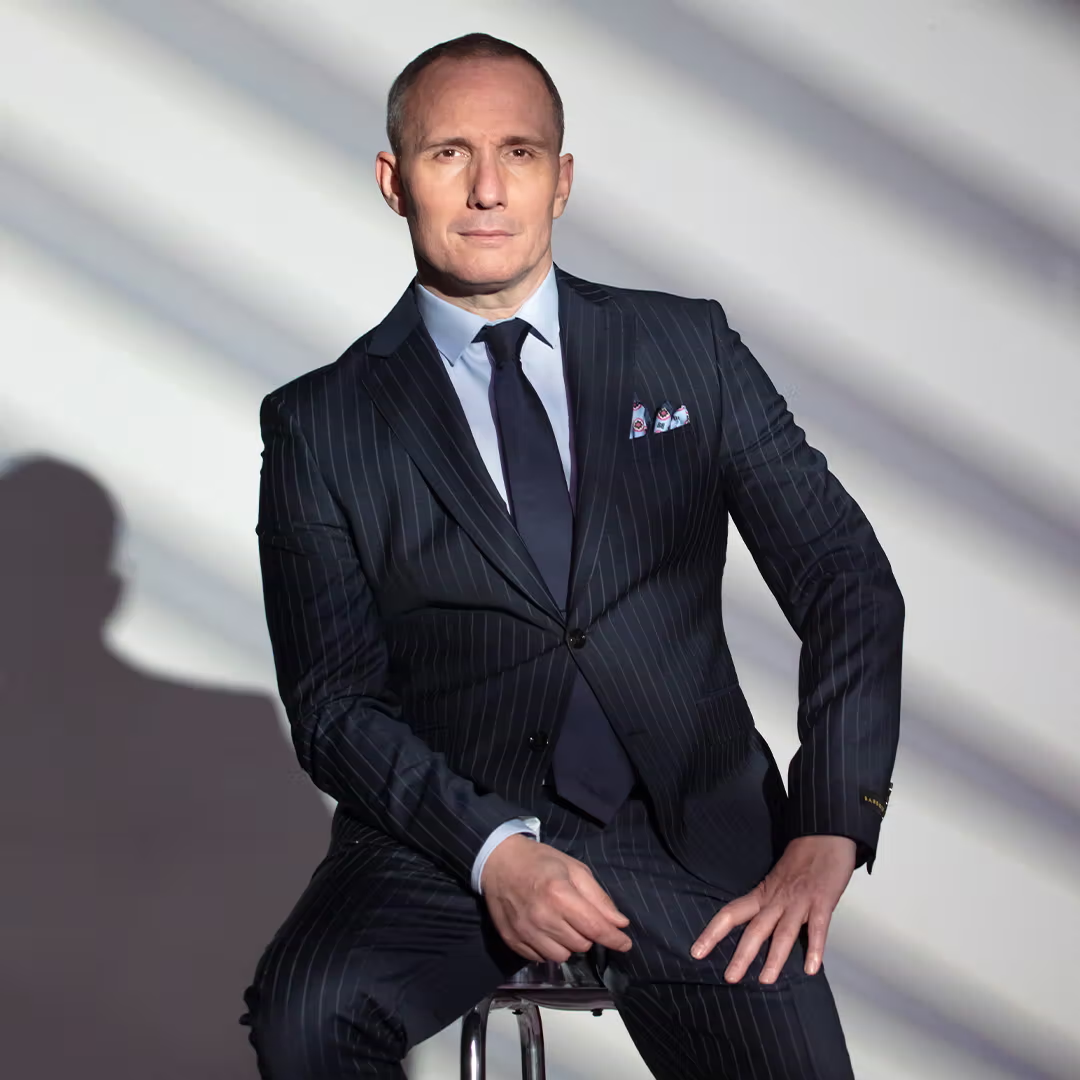
Barbosa Fashion
BigCommerce → Shopify migration
Premium men's fashion brand from Serbia

Collegiate Knitwear Designs
Shopify + affiliates
University knitwear brand
Ruve Shop
Conversion-led Shopify rebuild
Contemporary European women's fashion

Woolona
Custom Shopify build + multi-market expansion
Premium merino wool clothing brand
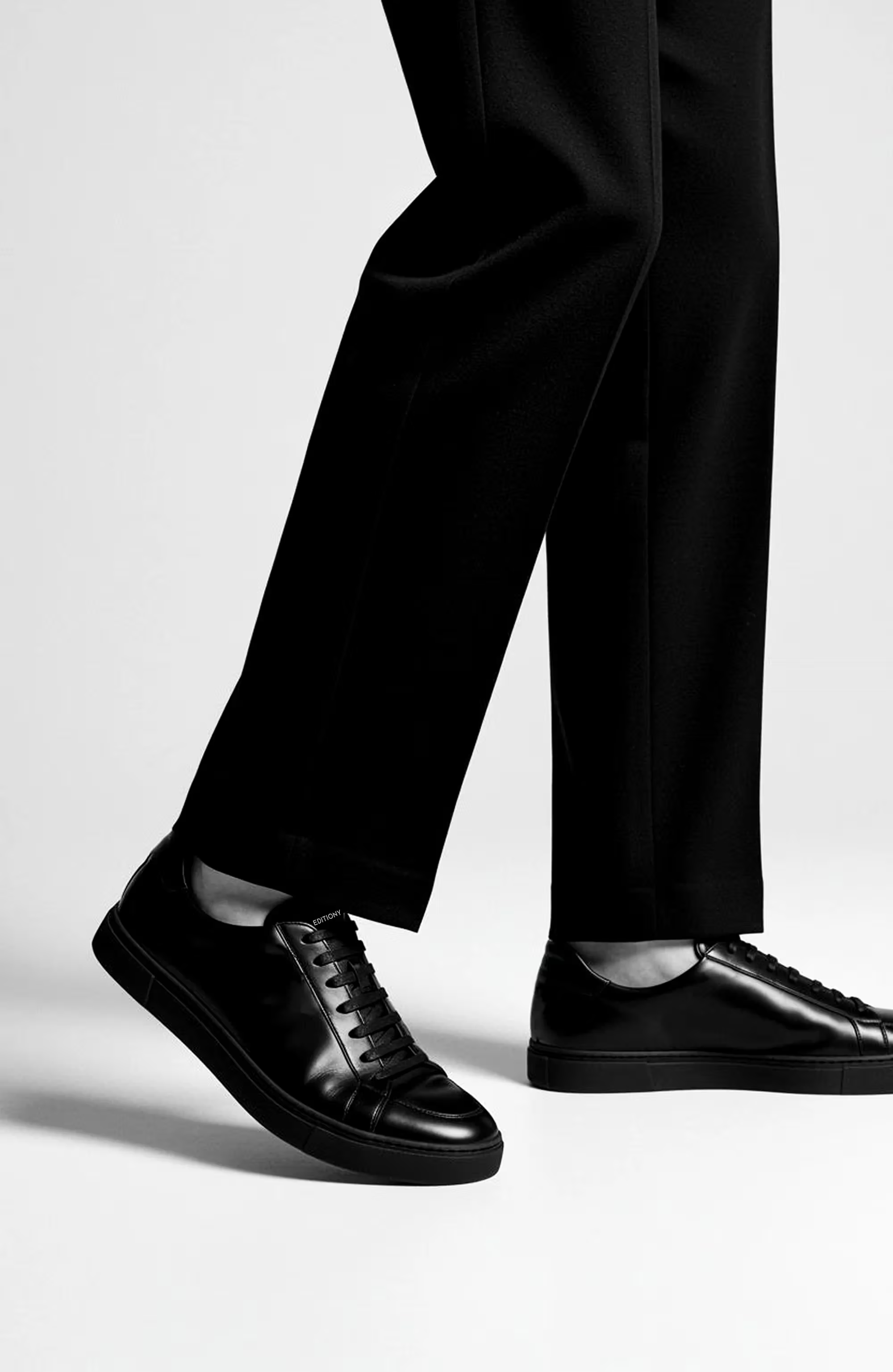
Editiony
Invite-only luxury Shopify storefront
Luxury limited edition fashion
What we build for fashion brands
Custom themes, lookbook templates, drop mechanics, size guides, multi-region setups and the technical-SEO work that keeps fashion stores ranking even when half the page is photography.
Custom themes built for fashion
Editorial layouts, lookbook templates, hero video, parallax, motion. We build themes that look like the work of an art director rather than a Shopify template tweaked twice.
Size guides, fit-finders and visual variants
Per-product size charts, region-aware sizing (US/UK/EU), color/material visual swatches that change the main image, and AI fit-finders integrated where they add real conversion.
Lookbook and editorial templates
Shoppable lookbooks, story-driven landing pages, runway and seasonal templates that the merchandising team can update without involving a developer.
Drops, scarcity and inventory locking
Queue-based releases, password-gated launches, hold-and-release inventory at queue admission, and recovery flows for the seconds-after-sellout traffic spike.
Performance and Core Web Vitals
Image SEO, third-party script audit, theme code splitting and Core Web Vitals work that moves the needle on Google ranking and on conversion. Real-user monitoring, not lab numbers.
B2B trade portals for wholesale
Linesheet ordering, account-gated price lists, NET30 terms, ERP integration. The B2B feature set on Shopify Plus is mature now — we know which native features to use and which to build around.
How we work with fashion brands
Strategy and discovery
A 30-minute call to map your collection cadence, image production workflow, current tech stack, integrations, drop schedule and growth goals. Written summary and rough timeline within 48 hours.
Design, scope and proposal
We pair fashion-led design references with Shopify-native technical scoping. Fixed-scope statement of work signed off before any code is written — no expanding scope, no surprise invoices.
Build, launch and growth
Weekly demos, staging access from week one, drop-day rehearsal, and a launch playbook covering DNS, redirects, inventory locking and post-launch monitoring. Support continues after go-live.
Trusted by Industry Leaders
5.0 from 22 Shopify Partner Directory reviews
- 500+ projects
- 35+ industries
- 98% client retention
- Shopify Plus partner since 2017
Honestly, we had a really great experience working with this team. From the very beginning, they showed a lot of patience and understanding for all of our ideas, even when we weren’t always sure how to explain things clearly. What pleasantly surprised us the most is that they didn’t just do what was asked — they often suggested improvements and solutions we hadn’t even considered. In many cases, they put in extra time and effort just to make sure the website turned out better, more functional, and easier for customers to use. Communication was smooth and quick, and everything we agreed on was delivered without complications. In the end, we got a website that not only looks professional, but also feels simple and intuitive — which was the most important thing for us. Highly recommended.
★★★★★We had custom coding on our theme and we had trouble translating it and the prices in our currencies did not show up properly either Mladen Terzic did the work for us very quickly and all is working now fine, so many thanks!!
Barista och Espresso★★★★★Codersy did an excellent job for us. We finished the first project fairly quickly and will be using them for the second phase as well. Would definitely recommend.
LGi Linens★★★★★Working with the Codersy team was a rare and truly positive experience in every sense – professionalism at the highest level. Building the Blossom Aromatherapy website with this team was smooth and enjoyable. From the very first communication to the final version of the site, everything was handled with precision, dedication, and a deep understanding of the brand. I would especially highlight: excellent organization and full respect for all agreements a strong understanding of the brand’s aesthetics and core values technical excellence of the Shopify website patience, flexibility, and clear communication at every step The result is a website that looks professional, clean, and fully aligned with our vision, while also functioning flawlessly for sales. Without hesitation — a strong recommendation to anyone looking for a serious, high-quality, and long-term sustainable Shopify website. We will definitely continue our collaboration on future projects.
★★★★★Mladden and his team have done an excellent job on our Headless Shopify site so far. As an SEO guy, I needed control over things that Shopify set by default and they were the only people who could solve this problem. They have built a nice website that we continue to improve on and can't wait to see the finished product.
★★★★★Excellent work delivered — highly recommend his services. If I had to describe it in one word: efficiency
★★★★★Mladen and his team did an amazing job upgrading my old theme (2.5.0) to the latest Dawn 15.4.0. They were super easy to work with, very quick to get things done, and made the whole process smooth from start to finish. I’m really happy with the result and would highly recommend them to anyone looking for reliable theme upgrades or Shopify work.
Chair Caps Australia★★★★★Amazing work! always providing a solution
★★★★★Codersy has been a reliable and prompt partner for our Shopify store. They’ve helped us build custom solutions that fit our needs and are always quick to respond when issues come up. Most recently, they tackled a critical site problem and resolved it in a timely way, which gave us a lot of confidence in their ability to handle important challenges. Highly recommend their team!
★★★★★
Amazing partner and amazing experience. Absolutely recommend!
★★★★★Codersy has been a huge help with fixing our tracking issues on our headless shopify story. Great to work with and very knowledgable. Highly recommend!
Fern & Petal★★★★★Great team to work with, solution oriented and great ability to customize in the Shopify environement
★★★★★Mladen did an outstanding job improving my product page. He significantly enhanced the structure and layout, implemented a number of smart solutions that led to a noticeable increase in conversion rates, and also carried out general optimization work across the website. He identified and fixed multiple performance issues, which resulted in a much faster and smoother user experience. I’m very satisfied with the results and highly recommend working with him. A true professional!
Keys to Health★★★★★Codersy built our Shopify store from scratch and did an incredible job. The site looks amazing, runs smoothly, and perfectly fits our brand. Super easy to work with, always responsive, and genuinely care about the result. Highly recommend for any Shopify project!
Muška Odela★★★★★Clear communication and very professional team.
Artisio★★★★★Codersy built our Shopify website from the ground up, and we couldn’t be more satisfied! Their expertise, attention to detail, and commitment to delivering a high-performing, visually stunning store exceeded our expectations. From seamless UX/UI design to flawless custom features, every aspect of our store was crafted with precision. The team at Codersy was responsive, professional, and truly understood our vision. They optimized our store for speed, SEO, and conversions, ensuring we had the best possible foundation for growth. If you’re looking for a top-tier Shopify agency, look no further—Codersy is the real deal! 🚀
Wonderly★★★★★Been working with Codersy for a long time - they've been a great support and asset to our company.
Carl FriedrikNiklas Oppermann, CEO, Carl Friedrik★★★★★Codersy successfully delivered a unique platform for our secondary market business. Their expertise and on-time delivery speaks volumes about their skillset. Highly recommend to anyone requiring Shopify development.
SecondShopAdam Froese, Founder, SecondShop★★★★★I found them to be intelligent, patient, skilled, and overall nice people to work with. They made the entire process of building our Shopify store smooth, easy, and with minimum hiccups. 10 out of 10, highly recommend you work with Codersy!
UnstrapNav Lajli, CEO, Unstrap★★★★★
Fashion-brand FAQ
Yes — fashion is one of our largest verticals. We have shipped Shopify stores for Barbosa Fashion (premium menswear), Ruve Shop (contemporary European womenswear), Woolona (premium merino wool), Collegiate Knitwear Designs (university knitwear) and Editiony (luxury limited-edition fashion).
Every fashion store we ship uses AVIF and WebP with responsive srcset, lazy-loading below the fold, and the LCP image preloaded with fetchpriority="high". We audit third-party scripts ruthlessly because most fashion stores carry 2–3 chat / review / personalisation widgets that quietly add a second to LCP. Result: mobile LCP typically under 2.5s on a 4G connection.
Yes. We build lookbook templates that the merchandising team can populate without dev involvement — drag-in product picks, hotspots over imagery, and conversion-tracked CTAs. We have shipped this for both monthly editorial drops and seasonal capsule launches.
Depends on the volume. For low-volume launches, scheduled-publish plus a password-gated holding page is enough. For high-volume drops with concurrent-traffic spikes, we layer on queue services (Shopify Plus has native support for some, third-party for others), hold-and-release inventory at queue admission, and bot/scalper mitigation. We have a launch-day playbook we run with the brand the week before.
Yes. Per-product size charts with region-specific tables (US / UK / EU / Asia conversions), measurement guides, and integration with AI fit-finders like True Fit or Bold when the data and budget justify the engagement. We measure impact: well-built size guides typically reduce returns 8–12% and lift CVR.
Yes. We configure Shopify Markets for GBP / EUR / USD / SEK / others as needed, set up hreflang on /uk/, /eu/, /us/ and additional country paths, manage tax-included pricing per region, and integrate with carriers and 3PLs that handle EU and UK customs cleanly. We have done this for European fashion brands selling to the UK, US and beyond.
A Shopify store build for a fashion brand starts from €3,000. A custom theme built from your own design starts from €8,000, and design plus custom theme, both by us, from €9,000. A Figma design on its own starts from €1,000, depending on the number of page templates. ERP integrations start from €2,500, custom apps from €3,000. A headless storefront at standard scope costs €10,000–20,000. Multi-region setups and larger headless projects are quoted per project, with a fixed price after a discovery call — no expanding scope mid-project. See our pricing.
A custom theme build is 6–10 weeks. A migration from Magento, BigCommerce or WooCommerce is 10–16 weeks depending on data volume and integration count. A standard headless Hydrogen build takes 9–10 weeks; projects with several markets or integrations take longer. We commit to delivery dates after the scoping phase, not before.
Ready to ship a Shopify store your fashion brand actually deserves?
Book a 30-minute strategy call. We will review your store, your collection cadence and your stack, and follow up with a written summary and rough timeline within 48 hours.
Rated 5.0 from 22 client reviews on the Shopify Partner Directory (opens in a new tab)